
How a Growing D2C Brand Scaled Monthly Orders 3.5X with fastrr Checkout

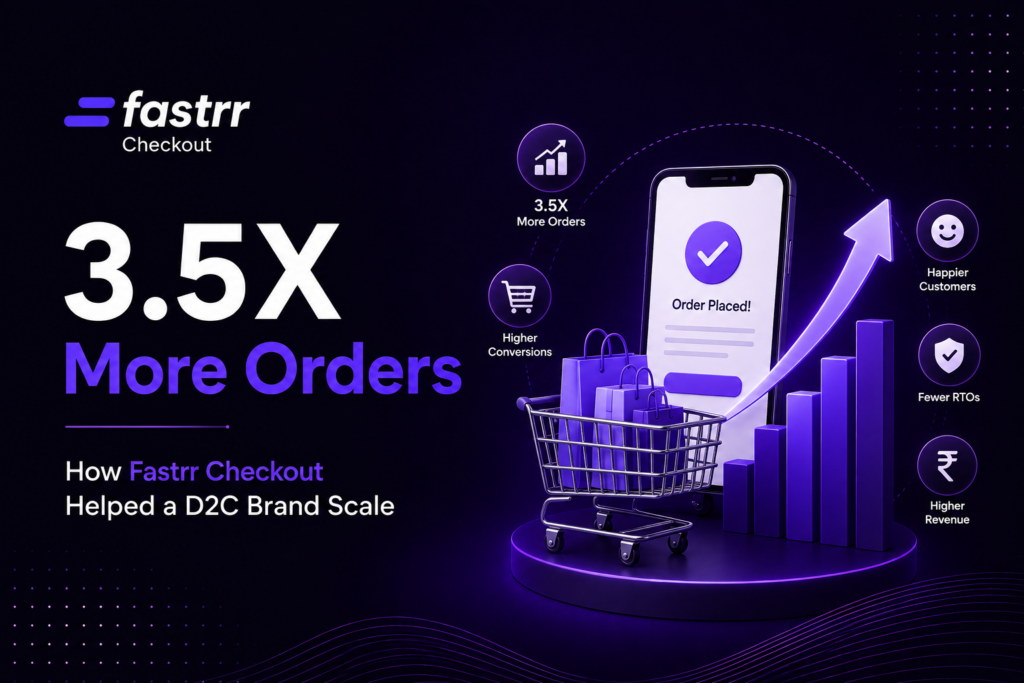
- A growing D2C brand onboarded with fastrr in August 2025 and scaled monthly orders from 1,631 to 5,706 by July 2026.
- Monthly order volume grew 3.5X, a 250% increase, within the first year.
- OTP-less Login delivered a 43.12% conversion rate, significantly outperforming standard OTP flows (~34%).
- Prepaid share remained close to 36% as order volume grew by 250%.
- Partial COD and RTO risk controls resulted in more than 99% of very-high-risk carts not proceeding to an order.
- SSO, Truecaller, address prefilling, Order Recovery and checkout conversion features helped reduce friction and support scale.
When a D2C brand starts scaling, checkout needs to match up. More traffic and orders mean a higher chance of friction: a clunky login, a fiddly address field, COD risk, or drop-offs at the payment stage. Even one of these issues can affect whether buyers complete their purchase, how they choose to pay, or the quality of the order itself.
That’s exactly what one D2C brand needed to address as its order volume grew. In August 2025, the brand decided to collaborate with fastrr Checkout. By July 2026, its monthly order volume had increased from 1,631 to 5,706, representing a 3.5X increase in monthly order volume, or a 250% increase.
fastrr’s login, payment, recovery and RTO protection capabilities supported the brand’s checkout journey as it scaled.
The approach focused on two priorities: reducing friction for genuine shoppers and applying stronger controls to higher-risk orders. This case study talks about how that combination supported order growth while maintaining steady prepaid adoption.
The Challenge
The brand was looking for a checkout setup that could handle higher traffic without adding extra steps for shoppers. They wanted to make the login process less friction-heavy, improve payment-stage recovery, and manage COD risk through automated rules.
The brand’s main priorities were:
- Cut down manual steps during login and address entry
- Speed up the authentication process to improve conversion
- Recover customers who dropped off while paying
- Inspire more buyers to opt for prepaid payment
- Lower exposure to highly risky COD orders
- Keep the checkout experience fast and smooth as order volume surged
How fastrr Checkout Supported Growth
fastrr Checkout came in at multiple points across the checkout journey, not just at payment:
faster Login with OTP-less Login
Login was the first friction point tackled.
- OTP-less Login was the best-performing option for the brand, with a 43.12% conversion rate, significantly outperforming standard OTP flows (~34%).
- Truecaller provided one more quick way to verify shopper identity.
- SSO recognised returning Shiprocket users and pre-filled their addresses so they did not have to type everything again. These features reduced the number of steps required during login and address entry.
Prepaid Incentives
The brand started giving a 10% discount on prepaid orders to encourage people to pay online instead of choosing COD. The prepaid discount rule influenced 163,974 carts, with more than 67,483 prepaid orders recorded. Even as monthly volume grew 250%, prepaid share remained broadly stable at around 36%.
Partial COD and RTO Protection
COD remained available, while fastrr’s RTO prediction engine identified orders with a higher likelihood of RTO. For the riskiest customers, the brand used Partial COD, a 25% upfront payment required before a COD order could go through.
The risk controls acted as a strong filter: only 13 orders were placed from 1,525 very-high-risk carts, representing a 0.8% conversion rate, compared to 44.3% for low-risk shoppers. This meant that more than 99% of very-high-risk carts did not proceed to an order under the applicable risk controls. COD was also disabled for orders above ₹9,999 and could be blocked for users with a history of high RTOs across the Shiprocket network.
Order Recovery
Shoppers who dropped off right at payment weren’t necessarily lost. Automated Order Recovery flows helped re-engage them without anyone on the brand’s team having to chase it manually.
Scarcity and Checkout UI
The brand also used several checkout UI features to support conversion and transparency. The Scarcity Engine displayed urgency messaging around products in high demand that might go out of stock, the checkout screen showed shoppers their total savings, and Estimated Delivery Dates set clear expectations before payment. COD was also relabeled as a “Convenience Fee”, making the additional charge clear during checkout.
Tracking and Measurement
Everything ran on top of GA4, Facebook Pixel, and Google Ads tracking, with Purchase and Initiate Checkout events giving the brand a clear view of the funnel for both checkout performance and marketing decisions.
The Results
Put together, here’s what changed:
- Monthly orders grew 3.5X, from 1,631 in August 2025 to 5,706 in July 2026
- Prepaid share barely moved, going from 35.01% to 36.00% despite that growth
- OTP-less Login converted at 43.12%, well ahead of standard OTP
- More than 99% of very-high-risk carts did not proceed to an order, with only 13 orders recorded from 1,525 very-high-risk carts under the applicable Partial COD rule
Conclusion
The bigger takeaway was that growth and risk control don’t have to be at odds. OTP-less Login, Truecaller, and SSO reduced friction at the start of the checkout journey. Prepaid incentives helped maintain a prepaid share of around 36% as order volume scaled. Partial COD and RTO rules helped limit exposure to higher-risk orders. And Order Recovery helped re-engage shoppers who dropped off during payment. For a D2C business that’s expanding, that’s the real value of checkout.