

What Are Prepaid Orders? Benefits, COD Comparison & Ways to Increase Them

- Prepaid orders are purchases where customers complete payment before the order is shipped or delivered.
- Prepaid payments can help sellers reduce RTO risk, delivery refusals and logistics costs associated with COD orders.
- Receiving payment upfront can improve cash flow and inventory planning by reducing dependence on COD settlements.
- Sellers can increase prepaid adoption through small discounts, COD fees, trust signals, faster delivery and payment reminders.
- A smoother checkout with multiple payment options can make customers more comfortable choosing prepaid payments.
- Fastrr Checkout helps sellers encourage prepaid adoption with features such as prepaid incentives, multiple payment options, faster checkout and intelligent COD controls.
Prepaid orders have become a strong pillar of eCommerce operations. Even though cash on delivery still dominates in many areas, accounting for 55% to 70% of orders, depending on the category, sellers are increasingly moving towards prepaid transactions for better control over logistics and income. COD may seem convenient, but it comes with hidden costs such as higher return rates, delayed payments and failed deliveries.
For sellers in smaller cities and towns, where managing cash flow and delivery risks is often more challenging, increasing the share of prepaid orders can reduce these risks, ensure faster payments and make operations more predictable.
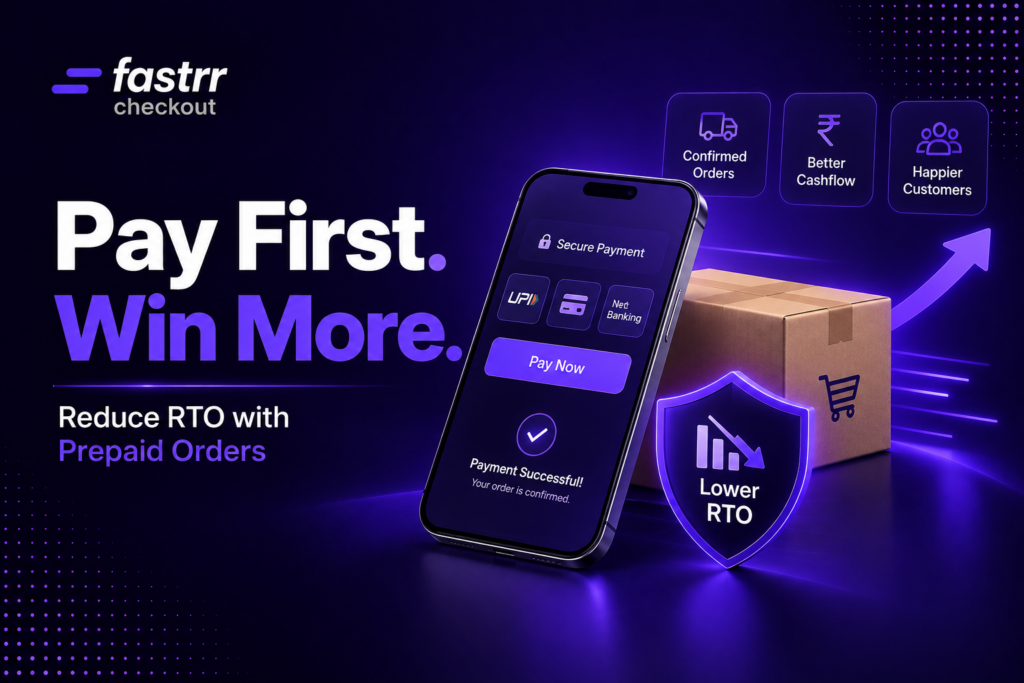
This blog explains what prepaid orders are, how they differ from COD and why they are becoming important for eCommerce businesses today.
What Are Prepaid Orders?
A prepaid order is one in which the consumer pays for an item at the time of purchase, completing payment before delivery. Consumers typically use the following payment methods:
- Digital wallets
- Net banking
- Credit or debit cards
- UPI
Once the payment is confirmed, the order is processed and shipped. For sellers, prepaid orders mean:
- Payment is received upfront
- Order intent is verified
- Buyer commitment is higher, reducing the chance of delivery refusal
Prepaid transactions are steadily increasing and are expected to contribute significantly to the nation’s online commerce growth, crossing ₹225 billion by 2026.
How Do Prepaid Orders Differ from Cash on Delivery?
Understanding the distinction between Cash on Delivery and prepaid orders is important for handling the payment approach.
The table explains the differences:
Factor | Prepaid Orders | COD (Cash on Delivery) |
Paytime Timing | Payments are completed before the order gets shipped | Payments get made during the time of delivery. |
Consumer Commitment | High commitment since the consumer has already made the payment. | Lower commitment, which leads to a much higher chance of refusal. |
RTO Rates | The RTO is usually about 5% | The RTO can range between 25% and 30%. |
Cash Flow | Instant inflow of funds without any delay. | The payment cycles can take between 7 and 30 days, depending on the settlement. |
Operational Costs | Lower costs because of a single shipping cycle. | Higher costs due to frequent returns and delivery attempts. |
Consumer Behaviour | It is preferred by digital-first users and repeat purchasers. | It is preferred by first-time purchasers or by people who are hesitant about digital payments. |
What Are the Benefits of Prepaid Orders for eCommerce Businesses?
Prepaid orders offer more than just faster payments as they improve overall operations. Key benefits include:
- Lower RTO rates
Prepaid orders reduce refusals and cancellations because consumers have already paid. This can lower RTO by 60% to 90%, protecting margins and reducing losses.
- Quick cash flow
Payments are received instantly, without waiting for courier settlements. This allows sellers to reinvest in inventory, maintain smooth operations and manage marketing spends, unlike COD, which can delay payments by weeks.
- Lower the logistics expenses
Failed COD deliveries increase costs due to repackaging, reverse logistics and additional shipping. COD is estimated to cost 50% more than prepaid orders.
- Good order quality
Prepaid buyers are generally more committed, less likely to miss deliveries, cancel at the last minute or provide incorrect addresses, which improves delivery success rates.
- Lowers fake orders and fraud
Since payment is required upfront, prepaid orders naturally filter out fake orders and fraudulent attempts common in COD.
What Are the Top 5 Ways to Boost Prepaid Orders?
Shifting consumers from COD to prepaid requires a gradual, balanced approach. Removing COD suddenly can reduce conversions, so consider these strategies:
- Provide small discounts
Offering a 2-5% discount can encourage consumers to choose prepaid, creating a sense of instant value.
- Add a nominal fee
Charging a small fee for COD orders makes prepaid more attractive without forcing the choice.
- Display trust signs
Show customer reviews, trust badges and clear return policies to build consumer confidence in prepaid payments.
- Offer instant delivery for the prepaid orders
Quick fulfillment can influence purchasing decisions, as consumers are more likely to prepay when they receive faster delivery.
- Use smart payment links and reminders
Sending payment links via SMS or messaging apps can convert COD orders into prepaid, with studies showing 12% to 15% of COD orders can be converted this way.
How Does fastrr Checkout Increase Prepaid Orders and Reduce COD?
fastrr Checkout helps eCommerce brands increase prepaid orders by making online payments faster and more rewarding while using intelligent rules to manage COD. It helps brands:
- Increase prepaid payments with discounts, prepaid nudges, and personalised payment options.
- Reduce COD orders by offering incentives to customers who choose prepaid payments.
- Control COD risk by using customer history, address quality, order value, and RTO risk to determine COD eligibility.
- Reduce RTO by identifying high-risk COD orders and applying appropriate payment rules.
- Improve checkout conversion with one-click login, address prefill, multiple payment options, and a faster checkout experience.
By combining prepaid incentives with intelligent COD controls, fastrr Checkout helps brands shift more customers from COD to prepaid payments while reducing RTO-related losses.
Conclusion
Prepaid orders are more than just a payment method. They are a tool to make your eCommerce operations more predictable, efficient and profitable. By gradually encouraging prepaid transactions, offering appropriate incentives and using platforms like fastrr Checkout to provide a secure, seamless payment experience, sellers can reduce returns, lower operational costs and improve cash flow.
Prepaid strategies thoughtfully allow you to build a stronger business, minimise risks and create a more reliable customer experience without eliminating COD.