
Consumer Psychology in eCommerce: How to Influence Buying Behaviour

- Consumer psychology is the study of how customers think, feel, trust and make purchase decisions while shopping online.
- Online buying behaviour can be influenced by factors such as pricing, credibility, convenience, social proof, urgency, product presentation and checkout experience.
- Elements such as reviews, delivery timelines, return policies, scarcity messaging and personalised recommendations can directly influence buying intent.
- High-performing eCommerce brands use psychological triggers such as FOMO, social proof, rewards, familiarity and trust signals to guide customer actions.
- What Is Consumer Psychology in eCommerce?
- What Influences Online Shopping Behaviour of Consumers?
- What are the Top Strategies to Apply Consumer Behaviour Psychology in eCommerce?
- What Are Some Successful Examples of Consumer Psychology Use?
- Reduce Checkout Friction and Make Buying Decisions Easier with fastrr Checkout
- Conclusion
- FAQs
What if you were told that most customers do not make buying decisions logically? Research consistently shows that emotions play a major role in purchase decisions, especially in eCommerce where attention spans are short and alternatives are only a click away. A shopper can land on your store with full intent to buy and still leave if something feels unclear or uncertain.
This is where consumer psychology becomes important. It helps explain how customers think, what builds trust and what creates hesitation during the buying journey. For an online seller, this directly impacts sales because even small factors, such as product presentation, pricing clarity, reviews, delivery timelines, or checkout steps, can influence whether a customer completes the purchase or drops off.
Buyers today place equal importance on the pre-purchase and post-purchase experience as they do on the product itself. Understanding what drives confidence, urgency and decision-making helps you reduce friction in the buying process and improve conversions from the traffic you already have.
What Is Consumer Psychology in eCommerce?
Consumer psychology is the study of how shoppers think and feel while browsing products online. It seeks to understand what compels people to click on a product page, add items to their cart, make comparisons or completely abandon a purchase.
Every online store influences customer behaviour, whether intentionally or not. The way products are presented and how easy the buying journey feels can directly affect decision-making. It is therefore important for sellers to understand these patterns and reduce drop-offs on their websites.
What Influences Online Shopping Behaviour of Consumers?
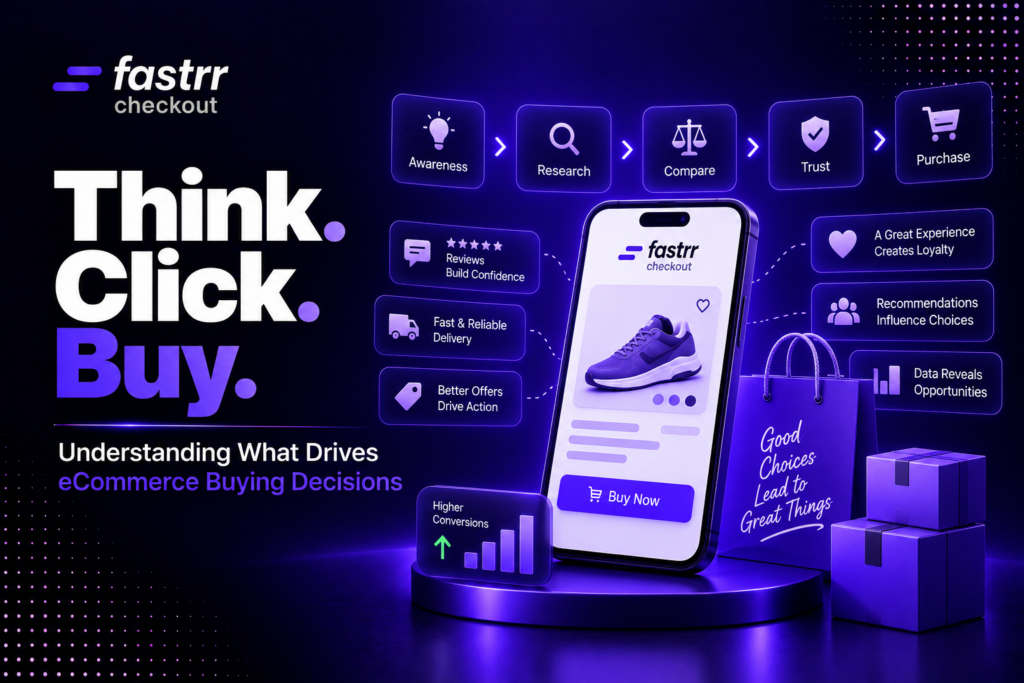
The global average cart abandonment rate is around 70%. This is not a coincidence. Several factors influence your target audience’s shopping behaviour and determine whether they drop a product or complete a purchase.
- Trust in your brand: Reviews, ratings, secure payment indicators and clear return policies help customers feel more confident while buying.
- Pricing perception: Hidden charges or confusing discounts can create hesitation, while transparent pricing improves purchase confidence.
- Social proof: Customers are more likely to buy products with positive reviews and testimonials, especially on platforms like Amazon.
- Convenience and speed: Slow websites, complicated navigation or lengthy checkout processes can frustrate users and lead to drop-offs.
- Product presentation: Clear images and easy-to-understand information help customers make faster decisions.
- Sense of urgency: Limited-time offers or low-stock alerts can encourage quicker decisions and reduce hesitation.
- Post-purchase confidence: Clear delivery timelines and regular tracking updates reassure customers even after purchase.
What are the Top Strategies to Apply Consumer Behaviour Psychology in eCommerce?
Consumer psychology can be understood, but it only benefits you when these concepts are properly applied to improve user experience. Small changes in website design and product presentation can go a long way.
These strategies work very well:
- Use colour psychology in website design
Colours influence how customers feel while browsing your store. Warm colours like red and orange are often associated with urgency and impulse buying, while shades like blue and green evoke trust and comfort.
Your colour palette also affects brand perception and navigation. With colour psychology, using consistent colours across banners, buttons and product pages creates a more familiar shopping experience and guides customers towards desired actions.
- Guide users with visual hierarchy
Shoppers prefer websites that feel easy to navigate. A clean layout with clear buttons reduces confusion and helps users find products faster.
Place important elements like your logo, hero banners, pricing and CTAs where they naturally attract attention. Contrasting CTA buttons can also encourage actions such as adding products to the cart or completing checkout.
- Write optimised product descriptions
Customers want to understand how a product fits into their life, not just its specifications. Product descriptions should explain how the product solves a problem or improves the customer’s experience.
Simple language and relatable scenarios can make products feel more appealing and easier to connect with emotionally.
- Rework product images
Product visuals heavily influence buying decisions. It is widely observed that many shoppers decide to click on products based on high-quality images.
Use multiple images from different angles and include lifestyle shots that show the product in use. Better visuals reduce uncertainty and make customers feel more confident before purchasing.
- Use social proof to increase trust
Online shoppers rely heavily on others’ opinions before making decisions. Reviews, testimonials, influencer mentions and user-generated content can reassure hesitant buyers.
Encourage customers to leave reviews and respond to feedback actively. Visible trust signals, such as trust badges, ratings and customer experiences, can significantly improve purchase confidence.
- Create urgency and FOMO
Limited-time offers, countdown timers and low-stock alerts can encourage quicker purchases. These FOMO techniques create urgency and reduce the likelihood that users will delay payment.
Highlighting product demand or showcasing social media activity around your products can also increase desirability and customer interest.
- Offer bundle deals
Bundle pricing makes products feel more valuable. Combining related products at a discounted rate can encourage customers to spend more in a single order.
Showing the original price alongside the discounted bundle price also helps customers clearly understand the value they are getting.
- Personalise the shopping experience
Customers prefer engaging with stores that feel relevant to them. Product recommendations based on browsing behaviour or previous purchases can improve product discovery.
Personalised email campaigns and customised suggestions can also increase repeat purchases and customer engagement.
- Use A/B Testing to understand customer behaviour
Consumer behaviour changes constantly, which is why testing is important. A/B testing helps you understand which messaging, pricing, layouts or CTAs perform better.
Testing different approaches regularly can improve conversions and reveal what your audience actually responds to.
What Are Some Successful Examples of Consumer Psychology Use?
Some of the biggest eCommerce and retail brands in India actively use consumer psychology to improve sales and conversions. Here are some examples:
- Flipkart and urgency-driven sales: Flash sales, countdown timers and “only a few left” messaging create a sense of urgency and encourage users to act quickly before deals sell out.
- Nykaa and social proof: Customer reviews, influencer content, tutorials and ratings help reassure shoppers before they purchase beauty and skincare products online.
- Zomato and behavioural nudges: Limited-time discounts, reorder prompts and real-time delivery updates encourage faster decisions and repeat purchases.
- Meesho and value perception: Low pricing and strong social commerce influence appeal to price-conscious online shoppers and drive higher conversion rates.
- Myntra and visual-first shopping: Lifestyle imagery and personalised fashion recommendations help users connect emotionally with products before making a purchase.
Reduce Checkout Friction and Make Buying Decisions Easier with fastrr Checkout
The checkout stage can create hesitation when customers have to repeat information, navigate too many steps, choose between unfamiliar payment options or remain uncertain about delivery. Reducing this cognitive load can make the buying journey feel simpler and more predictable.
fastrr Checkout helps brands create a smoother checkout experience through one-click login, address prefill, personalised payment experiences, real-time Estimated Delivery Dates and Smart Cart. These features reduce unnecessary effort while giving shoppers clearer information when making their final purchase decision.
fastrr also supports prepaid nudges, personalised offers and intelligent COD controls, allowing brands to tailor the checkout experience to different customer preferences and risk levels. By making checkout faster, clearer and more relevant, brands can reduce hesitation and help more shoppers move from purchase intent to completed orders.
Conclusion
Most customers do not abandon a purchase because they stop liking the product. In most cases, the decision changes because something during the journey creates doubt or hesitation. This is why consumer psychology plays such an important role in eCommerce. Every interaction in your store influences how confident a customer feels before making a purchase.
Your goal is not only to attract traffic but to reduce uncertainty at every step. When a customer has to pause and think too much, you risk losing the sale. Clarity, trust and ease of navigation often matter more than aggressive marketing.
Brands that perform well online focus on removing friction rather than adding more information or options. When the buying process feels simple, familiar and safe, customers are far more likely to complete the purchase.